The Prize and the Broken Promise
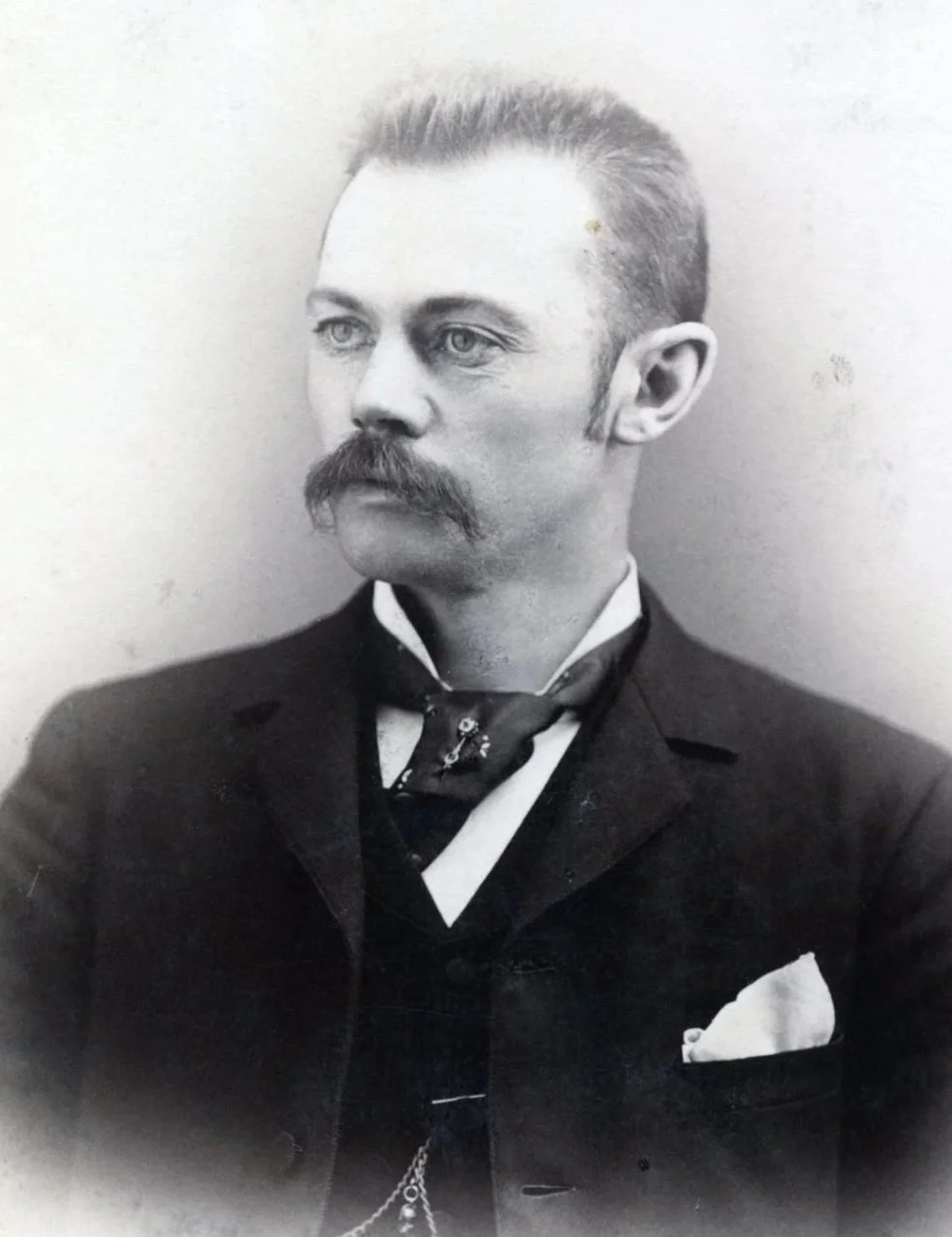
The clock on the mantle at number 1204 chimed the hour along in duet with the dulcet deep of the church bells tolling over the rooftops of Wabash Avenue. He pulled the matching pocket watch and key from his waistcoat, wound the watch with the key, and checked the time. Then he put it back with a gentle pat, noting that the chain fell across his waist into the pocket the way he wanted it to.
Everything was in order, just as he’d planned it would be.
Still, it would have been nicer to have been able to keep his father’s pocket watch, he reflected. That had been a fine and fitting pocket watch.
But in the end, it was not possible. He’d been left with nothing. The contrast of that loss to who he saw staring back at him in the mirror was striking. So Willie did not look.
Outwardly, William Clinton Tillotson was a man preparing himself for the most prestigious day of his young life. Inwardly, he was walking through the past.
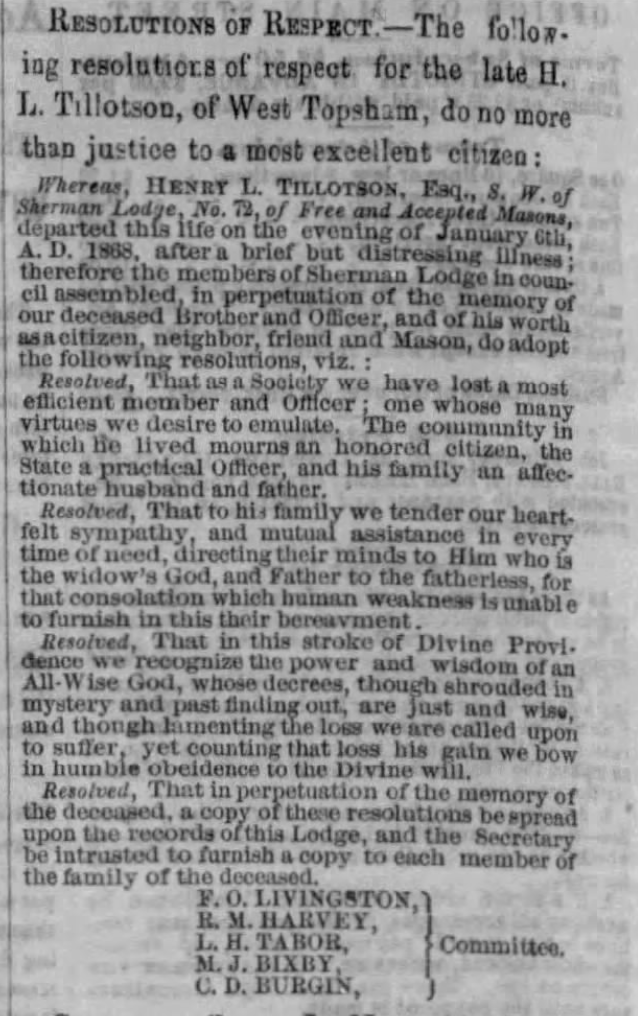
First, the lamplight flickers as he watches his father, seated at the table facing the fire, and tooling the stretched white lambskin trimmed with blue silk ribbon with images of the all-seeing eye, the sun and the moon. His father, a shoemaker, knew the feel and the way of leather like other men know their own name, so his precision was intuitive and his apron the finest in all at Sherman lodge No 72. Behind him, a trio of freshly painted landscapes sat on easels to dry, the day’s efforts of his mother’s students.
Then his face turned hot, crying, his arms reaching. He’d run all the way from his grandparents’ house to his own and been caught at the door by his father. His small fists pummeled the air as he swung for the door, or the window, or a glimpse of his mother. Anything to grasp to keep his world from slipping away. But his father wrapped him in those strong arms. ‘I’m sorry Willie,’ he said softly.
He wrapped him tighter to his chest, feeling young Willie’s beating heart against his chest. Willie could hear the ticking of his pocketwatch, and the sound of the rasping, struggling breathing from within the house went away.
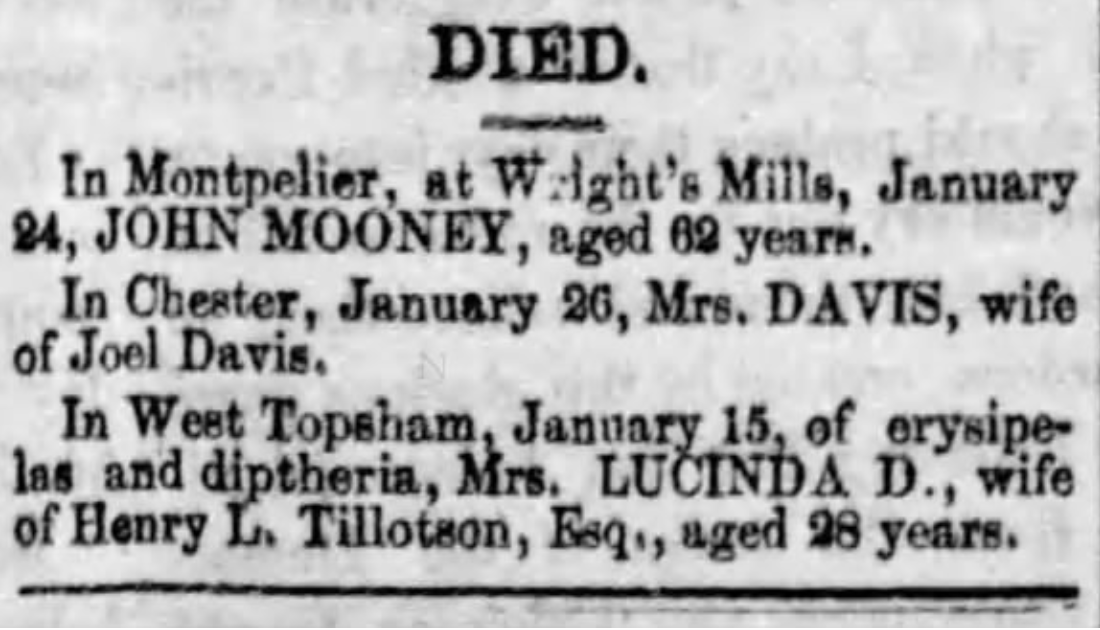
Willie’s mind encounters another lamplit scene. Christmas day, and a Christmas day above expectation. Willie snuck another piece of the tantalisingly dense wedding cake. His father, checking his pocket watch, then accepting a glass of switchel from his friend, and the whole room raising a toast to the new Mr and Mrs Tillotson.
Having been dancing, his father drank deeply from the cup.
Then Epiphany.
Lastly, firelight again, this time holding vigil and melting the hard January earth. The shovels, picks, laid aside after two days effort for 6 feet of depth. Willie watched as the casket, covered in an acacia branch and carrying his father, was lowered into the earth.
His father, who thirteen days earlier danced in his best with his new bride, now lay resting in the most beautiful apron of the Masonic lodge. Lodge members, one by one, set their white gloves on the coffin.
This time, there were no tears left to cry. There was nothing left.
Willie cleared his throat and adjusted his waistcoat one last time, a double tug with both hands. Then he picked up his top hat and cane, and made his way out the door onto Wabash Avenue proper.
Here, he boarded the new cable car. It was a 5¢ fare, but he knew today was a special day, and it was worth the fare. Riding downtown, passing through the throngs of people still fascinated by this new mode of transportation, he jumped off before the loop and walked the remaining blocks briskly to the Grand Opera House, meeting his classmates and congratulating them on his way.
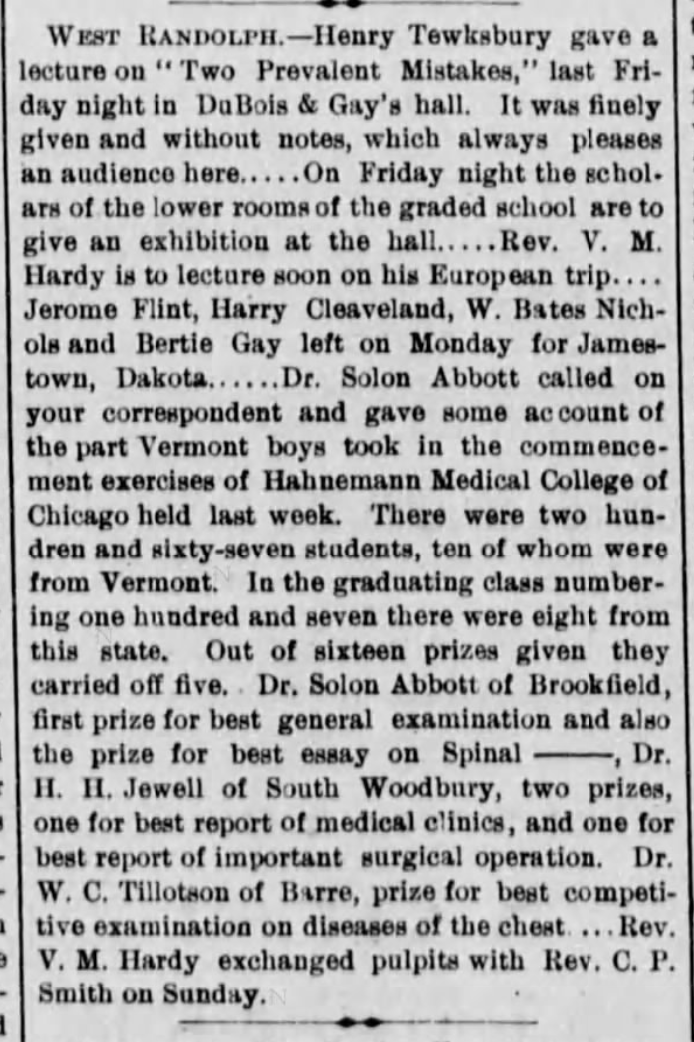
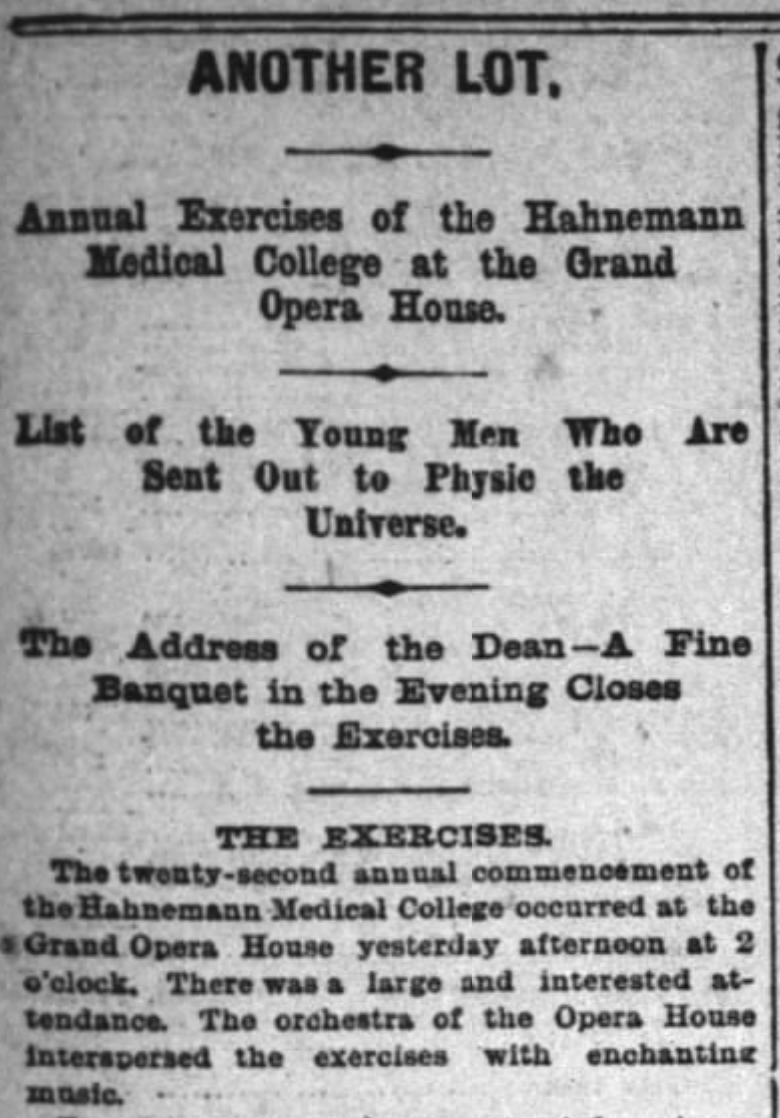
The doors of the Grand Opera House stood open, and in it thronged a lighthearted group dressed in their finest. This was the 22nd annual commencement of Hahnemann Medical College, and the largest to date.
The Inter Ocean, 24 February 1822
Willie paused briefly and took a breath before passing the uniformed, white-gloved attendant holding the door into the gas-lit interior beyond. A slightly pungent sulfur smell reached him as he passed red velvet curtains gilded in gold fringe into a dizzyingly colourful opera hall where music swelled from the orchestra in the pit.
An attendant checked his card and directed him to his seat. He could see Doctor Alvin Small and the other professors taking their places on the stage. Having just left Doctor Alvin’s house, Willie was acutely aware of the privilege he’d enjoyed, living and learning in the home of the president of the faculty.
The meeting began, the Reverend Doctor Burrows, D.D., asking divine grace on the exercises.
After a short musical intermezzo, Doctor R Ludlam, Dean of the Faculty, read his annual report. Then Doctor Alvin Small rose from his seat to confer the degrees.
Gentlemen: You have but begun your course in life. Thus far, your work has been preparatory. Be honest, be faithful, be true. In this lies your success. The faculty and the trustees wish you success.
Then he read the 107 names of the young men sent out to physic the universe, announcing along the way the name of William Clinton Tillotson.
The music swelled again, and with it, Willie’s heart. He’d finally made it. He couldn’t wait to tell Fanny about this. They could finally settle down, once he started his practice.
Professor S. Levitt, M.D., gave a valedictory address, and then a large number of exquisite bouquets were distributed among the class. Willie’s bouquet, with a touch of Spring perfuming the vicinity from a sprig of white hyacinth, he laid across his lap. The next part would be the prizes, and he was invested. H. D. Vilas was reading those out now.
First prize, and $25, to Solon Abbott, MD of Vermont, for best final examination. Solon was a good man, and he would make a great doctor. Second prize, and a buggy case given by Halsey Bros, to E J Guyott for second best general examination.
Doctor Vilas carried on. Willie listened and waited and tried not to let his mind wander. But suddenly, near the end, he heard his name.
Small Prize- to W. C. Tillotson. For best examination of diseases of the chest.
He’d taken home the prize from his very own mentor. He rose shakily from his seat as the Grand Opera Hall filled with warm applause and he cleared his throat.
The rest of the commencement exercises, what little was left, was a blur. Willie couldn’t believe how far he’d come. At the end, as he stood collect his bouquet and the congratulations of his fellow graduates around him, he breathed in this moment before heading up the road to the celebratory banquet at the Grand Pacific Hotel.
He didn’t mean to break the promise as soon as he stepped through the threshold.